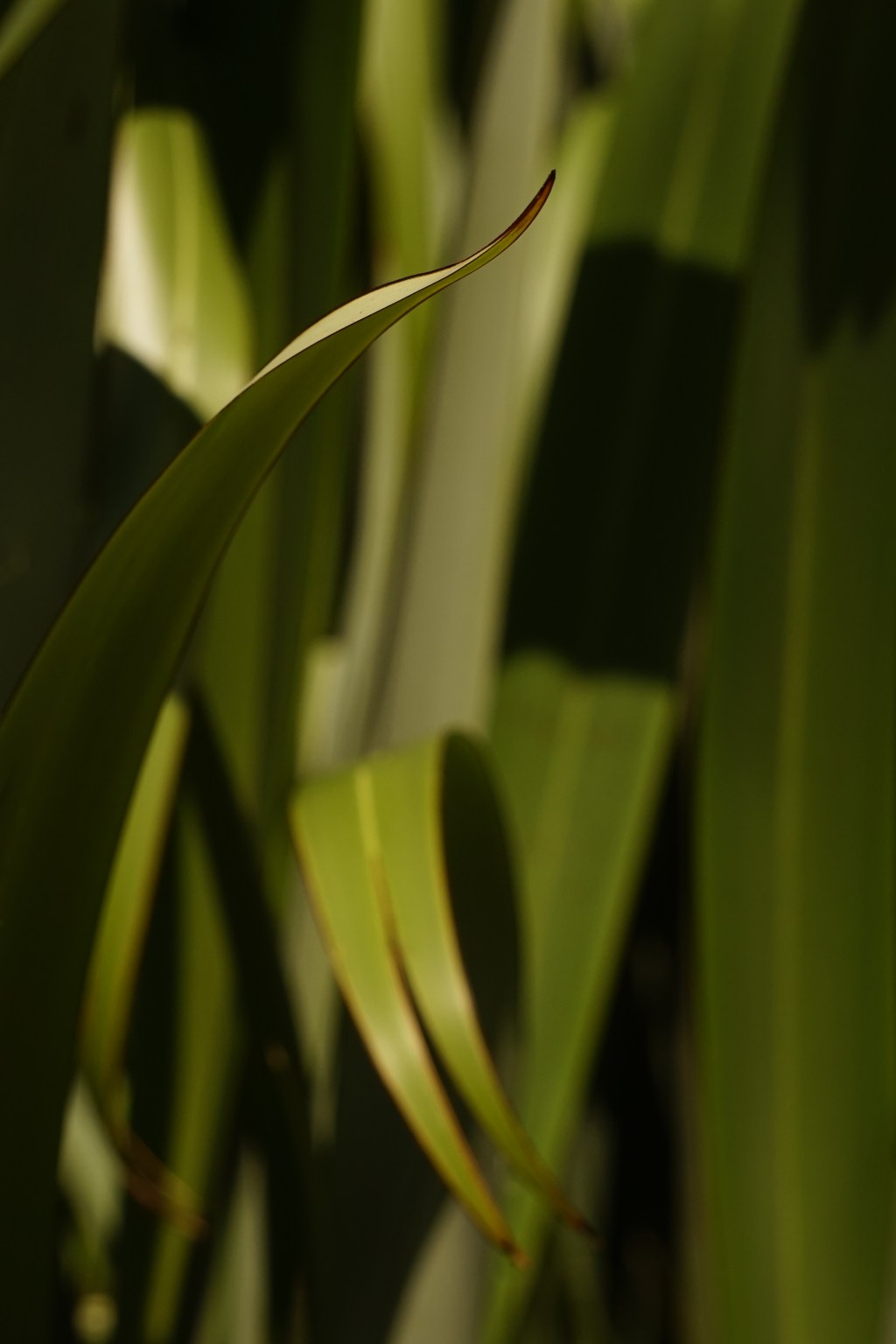
With the onset of summer and the digging of gardens to cultivate my favourite types of harakeke, I now realise that the true apprenticeship of the weaver begins, in the dirt.
This month my sweetheart finally dug me a decent sized garden.
We toiled for a few days together, mainly he, but eventually we filled it with some of my favourites and I’ve been religiously watering ever since.
It’s enabled the deepening of relationship, yes with my human, but also the harakeke.
Last night while performing my watering ritual it dawned on me, a weaver must be a gardener first. Lightning bolt of understanding.
Until recently, I’ve been sourcing my weaving materials from council plantings, botanical gardens and pā harakeke all over town and sometimes country.
This means I have absolutely no control over who else uses them, what state they’ll be in each time I turn up, or even whether they’ll be there.
It’s not the easiest decision to grow your own, especially if you’re a renter. I know many weavers that put off growing their harakeke due to space, conditions set by landlords or the possibility that the property may be sold making a sudden move necessary, a heartbreaking prospect when a fully mature plant can take around 4 years of nurture.
I too, fear these outcomes, but I also understand the value of doing it anyway, knowing that things can work out well and that the best time to start, is now.
Recently it’s dawned on me, that I know where the baby shoot will come through, long before it arrives. For weavers, this is paramount, as cutting that shoot will destroy the plant.
I’ve also discovered which plants will soon flower, according to the way certain sets of leaves grow in the months prior.
These gems of understanding, have come from growing my own, spending time cleaning, pruning and watering, removing disease and clearing weeds and mulching with lawn cuttings to keep the soil from drying out.
This nurturing comes easy to a mum whose children have left home, and the experience is similar. There is joy when overnight, new growth is noticed, concern when a blemish appears.
Sometimes a hard prune is necessary to cut out disease. These cuts may endanger the plant as a whole but a gardener understands that sometimes this sacrifice is required for the benefit of the greater good.
It’s peaceful in the early hours of the morning and in the long shadows of late afternoon, 10 to fifteen minutes of silence barefoot in the backyard, the medicine I’ve been needing throughout a difficult year.
 ko au te kete
Leave a comment